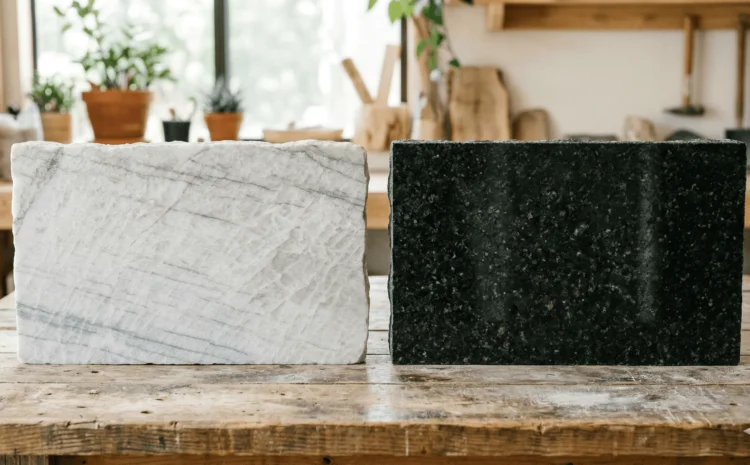
Granite vs Quartz Countertops: Which Is Better for Your Kitchen?
Quartz is generally easier to maintain because it is non-porous and does not require sealing, while granite handles heat better and often costs less. When comparing quartz vs granite countertops, the right choice depends on your cooking habits, budget, and preferred appearance. This guide helps homeowners choose for a kitchen platform or bathroom vanity.
Quartz vs Granite Countertops at a Glance
| Factor | Quartz | Granite |
| Material | Engineered stone made from crushed quartz, resin, and pigments | Natural stone cut from quarried blocks |
| Appearance | Consistent colours and patterns | Natural variations make every slab different |
| Heat resistance | Resin can scorch or discolour under high heat | Generally handles heat better |
| Stain resistance | Non-porous surface resists everyday stains | Sealing helps reduce absorption |
| Scratches and chips | Resists everyday scratches but can chip at edges | Hard surface; exposed edges can chip |
| Maintenance | Routine cleaning without sealing | Periodic sealing may be required |
| Cost | Generally higher | Often more budget-friendly |
| Best suited for | Low-maintenance kitchens and bathroom vanities | Cooking areas, natural aesthetics and tighter budgets |
Quick verdict: Choose quartz if easy cleaning and consistent patterns matter most. Consider granite if you prioritise natural variation, heat tolerance and upfront affordability.
What Are Granite and Quartz Countertops?
Granite is a natural igneous rock formed when molten material cools beneath the Earth’s surface. It is quarried in blocks, cut into slabs and finished for residential and commercial applications. Its mineral composition creates distinctive colours, speckles and patterns that vary from one slab to another.
Quartz countertops are engineered surfaces made primarily from crushed quartz combined with resin, pigments and other materials. This manufacturing process allows for greater consistency in colour and pattern, including designs that resemble natural stone.
The key difference is that granite comes directly from nature, whereas engineered quartz is manufactured to achieve specific performance and appearance characteristics. This distinction influences how both materials respond to heat, stains and everyday maintenance.
Granite vs Quartz for Kitchen: Which Suits an Indian Kitchen Platform?
Indian kitchens often involve frequent cooking, hot cookware, oil splashes, turmeric, spices and tea or coffee spills. The most suitable surface should accommodate these everyday demands while fitting your budget and design preferences.
Here is how the two materials compare across different kitchen zones.
Near the hob: Granite is generally the more practical choice for areas exposed to hot cookware. It handles heat better than engineered quartz, although placing hot vessels directly on any surface is best avoided.
On the food preparation counter: Quartz is a convenient option for chopping ingredients, rolling dough and preparing meals. Its non-porous surface helps resist staining from common kitchen ingredients, and routine cleaning is straightforward. Always use a chopping board.
For a single, continuous countertop: If you prefer one material throughout the kitchen, base your decision on your cooking habits. Granite is a strong option for households that cook frequently at high temperatures, while quartz suits those who prioritise stain resistance and lower maintenance.
Our recommendation: For homeowners seeking the best countertop for Indian kitchen use, either material can work well when selected for the right conditions. If you can accommodate two materials, granite near heat-intensive cooking zones and quartz on preparation areas may offer a practical combination. Otherwise, choose the surface whose strengths best match your daily routine.
Granite vs Quartz Cost per Square Foot in India
The cost of granite and quartz depends on the specific slab, its quality, thickness, finish and installation requirements. Granite is often more affordable at entry-level price points, while engineered quartz may cost more because of its manufacturing process and design options.
For an accurate comparison, request current quotations for the same dimensions, thickness and finish.
| Cost factor | Granite | Quartz |
| Indicative material price | $15–$70/sq. ft | $15–$70/sq. ft |
| Budget options | Often available in more affordable varieties | Depends on brand and product range |
| Premium options | Rare colours and distinctive patterns may cost more | Premium designs and brands may cost more |
| Installation | Depends on cutting, edges and fitting | Depends on cutting, edges and fitting |
| Long-term upkeep | May include periodic resealing | No routine sealing required |
Several factors influence the final quotation:
- Origin and grade: The source, quality and visual characteristics of a slab affect its price.
- Thickness: A 20 mm slab and a 30 mm slab may have different material and installation costs.
- Edge profile: Decorative edges require additional fabrication.
- Cutouts and seams: Sink openings, hob cutouts, joints and complex layouts can increase labour costs.
- Maintenance: Granite may require periodic resealing, depending on its porosity and use. Quartz does not require routine sealing.
Compare the complete installed cost rather than the material price alone. This gives you a more realistic picture of what each surface will cost over time.
Granite vs Quartz Heat Resistance
Granite generally tolerates high temperatures better than engineered quartz. This makes it a practical option for cooking areas where hot cookware is frequently handled.
Quartz contains resin, which can scorch, discolour or suffer damage when exposed to excessive heat. The temperature tolerance varies by product, so a single limit should not be assumed for every quartz surface. Check the manufacturer’s technical documentation before publishing or relying on a specific temperature rating.
Granite is more heat-tolerant, but it is not completely immune to damage. Sudden temperature changes, repeated thermal stress and direct contact with extremely hot cookware can affect stone surfaces.
For everyday use, follow these precautions:
- Place hot pans and pressure cookers on trivets or heat-resistant pads.
- Avoid moving hot cookware directly from a flame or oven onto the countertop.
- Follow the care instructions supplied for your particular slab.
- Do not assume that a surface’s heat resistance makes it safe from thermal shock.
If your kitchen involves frequent high-temperature cooking, granite has an advantage. However, using heat protection with either material helps preserve its finish.
Granite vs Quartz Stain Resistance
When evaluating granite vs quartz stain resistance, the main consideration is how easily liquids and pigments can penetrate the surface. Quartz is non-porous, which makes it effective at resisting common household stains. Granite is a natural stone with varying levels of porosity, so sealing is important for many varieties.
Turmeric and spices: Turmeric can leave visible yellow marks, especially on light-coloured surfaces. Quartz generally resists absorption, but spills should still be cleaned promptly. Sealed granite also offers protection, although its performance depends on the stone and the condition of the sealer.
Cooking oil: Oil can penetrate inadequately sealed granite and leave dark patches. Quartz is less susceptible to absorption because of its non-porous surface. Clean oil spills from either material rather than allowing residue to build up.
Tea and coffee: Both can leave marks if spills are neglected. Quartz generally makes routine cleanup easier, while granite benefits from appropriate sealing and regular care.
Colour also matters. Mid-tone and speckled slabs tend to disguise minor marks better than plain white surfaces. If you prefer a light countertop, ask about its stain resistance and cleaning requirements before making a decision.
Granite vs Quartz Durability: Scratches, Chips and Cracks
Both materials are hard, long-lasting countertop options, but neither is indestructible. Their performance depends on the specific product, fabrication quality and how the surface is used.
- Scratches: Both surfaces resist many everyday scratches, but knives, abrasive materials and rough handling can damage the finish. Always use a chopping board.
- Chipped edges: Granite can chip around exposed corners and edges. Quartz can also chip, particularly around corners, cutouts and unsupported areas.
- Cracks: Poor support, installation errors, heavy impact or stress around sink and hob cutouts can cause either material to crack.
- Thermal shock: Sudden temperature changes may damage either surface, although granite generally handles heat better than engineered quartz.
For a durable installation, choose a suitable slab, ensure proper cabinet support and use an experienced fabricator. Correct installation is as important as material selection.
Granite vs Quartz Maintenance and Sealing
The main difference in granite vs quartz maintenance is the need for periodic sealing. Quartz is generally simpler to maintain, while granite requires care based on its porosity and how heavily the surface is used.
Maintaining granite
- Clean regularly with a suitable stone-safe or pH-neutral cleaner.
- Avoid harsh acidic cleaners unless the product manufacturer confirms they are suitable.
- Apply an appropriate sealer when required by the stone’s care instructions.
- Check whether resealing is needed using the manufacturer’s recommended method.
A water-drop test can provide a preliminary indication of whether some granite surfaces are absorbing moisture. Place a few drops of water on a clean, dry area and observe whether the stone darkens as the water absorbs. However, this is only a basic check, not a definitive test for every stone or sealer.
Maintaining quartz
- Wipe the surface with a soft cloth and mild, pH-neutral cleaner.
- Clean spills promptly, especially oils and strongly coloured ingredients.
- Avoid abrasive scrubbers that may affect the finish.
- Use trivets and chopping boards to prevent heat and cutting damage.
Quartz does not require routine sealing. Granite can remain a practical, low-maintenance surface too, provided its specific care requirements are followed.
How to Choose Between Granite and Quartz
Use the following guide to match the material to your priorities.
| If you want… | Consider |
| A budget-friendly stone | Granite |
| Better tolerance for heat near the hob | Granite |
| Lower routine maintenance | Quartz |
| A consistent, modern appearance | Quartz |
| A natural, one-of-a-kind pattern | Granite |
| A bathroom vanity with minimal upkeep | Quartz |
Before finalising your selection, view the full slab rather than relying on a small sample. Natural granite can have significant variations in colour, veining and mineral patterns, while quartz designs can also vary between batches.
Check the slab under lighting similar to your kitchen or bathroom. Review the available thicknesses, edge profiles, sink cutouts and installation requirements with your supplier.
Your final decision should account for appearance, performance, cost and the care you are comfortable providing over the years.
Granite and Quartz Options from Aravali Onyx
Aravali Onyx helps homeowners and project buyers explore natural stone options for residential and commercial interiors. When selecting a countertop, the right starting point is to compare the available granite slabs with suitable quartz surfaces based on your space, design preferences and everyday requirements.
Granite offers natural variation, distinctive mineral patterns and strong heat tolerance. Engineered quartz provides consistent designs, a non-porous surface and a convenient maintenance routine. Both can complement different kitchen styles, from understated contemporary interiors to more traditional spaces.
When exploring the available collection, ask about:
- Available colours, patterns and surface finishes.
- Slab dimensions and thickness options.
- Product-specific care and maintenance requirements.
- Fabrication, edge finishing, cutouts and installation arrangements.
- Current pricing, availability and delivery details.
Review the relevant granite and quartz product pages to compare your options. You can also contact Aravali Onyx for assistance with product selection and a quotation based on your project requirements.
Conclusion
Both granite and quartz can be excellent countertop materials. Granite is generally better suited to heat-intensive cooking and budget-conscious projects, while quartz is a strong choice for homeowners who prioritise stain resistance and easy maintenance.
Compare the available slabs, check product specifications and consider how you use your kitchen before deciding. Contact Aravali Onyx to explore suitable options and request a quotation for your project.
Frequently Asked Questions
Quartz is generally better for homeowners who want easy cleaning and good resistance to everyday stains. Granite is preferable when heat tolerance, natural patterns and upfront affordability are priorities. For Indian kitchens, consider where the countertop will be installed, how frequently you cook and whether you can use heat protection consistently.
Quartz is usually more expensive than entry-level granite, but the final price depends on the product. Brand, colour, quality, thickness, fabrication and installation can all affect the quotation. Compare current prices for equivalent slab dimensions and finishes, including delivery and fitting, before deciding which material offers better value.
Granite is often the more affordable option, particularly when you choose commonly available varieties. However, premium granite with rare colours or distinctive patterns can cost as much as, or more than, some quartz products. Ask for current quotations and compare the full installed cost rather than relying only on the price per square foot.
It is best not to place a hot pan directly on quartz. The resin in engineered quartz can scorch or discolour under high temperatures, and sudden temperature changes can cause damage. Granite generally tolerates heat better, but trivets and heat pads are recommended for both materials to protect the surface.
Quartz is generally resistant to turmeric and oil stains because its surface is non-porous. However, residue can accumulate, and strongly coloured substances may leave marks if not cleaned according to the manufacturer’s instructions. Light-coloured quartz can make visible marks more noticeable, so clean spills promptly and use suitable surface cleaners.
Many granite countertops benefit from periodic sealing, although the frequency depends on the stone’s porosity, the sealer and everyday use. Some dense granite varieties may need less frequent treatment. A water-drop test can help identify possible absorption, but follow the supplier’s care instructions to determine whether resealing is necessary.
Both quartz and granite are hard countertop materials, but strength depends on the particular product and installation. Quartz offers consistent engineered properties, while granite generally handles heat better. Both can chip at exposed edges or crack around poorly supported cutouts. Proper fabrication, cabinet support and everyday care help reduce damage.
Neither material is completely scratch-proof. Both resist many everyday scratches, but sharp tools, abrasive objects and heavy impacts can damage their surfaces. Use a chopping board rather than cutting directly on the countertop, and follow the manufacturer’s cleaning recommendations to preserve the finish.
Quartz is often a convenient choice for a bathroom vanity because its non-porous surface resists everyday moisture and does not require routine sealing. Granite can also work well when appropriately selected and maintained. Consider the appearance, basin cutouts, installation quality and care requirements before choosing a vanity top.
Both granite and quartz can last for decades when properly installed and cared for. Neither material has a guaranteed lifespan because performance depends on product quality, usage, support and maintenance. Quartz generally requires less upkeep, while granite may need periodic resealing. Regular cleaning and prompt attention to damage help preserve either surface.
