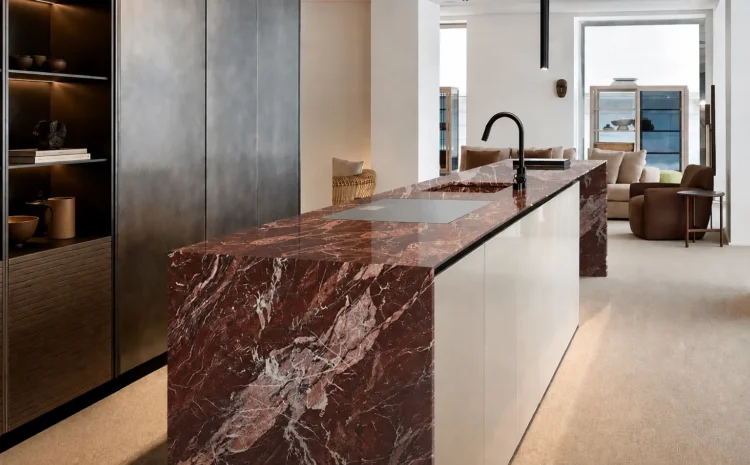
Which is The Best Stone for Kitchen Countertops?
The kitchen countertop is one of the hardest-working surfaces in any home. They have to withstand everything from hot pans to spilled wine to raw meat to daily cleanings. So naturally, when picking the stone for your kitchen counter, the decision is more important than most people understand.
If you go into any (brick and mortar) stone showroom, you will quickly learn that there is granite, marble, quartzite, onyx, and limestone, plus many more. Each of these stones has its own characteristics and its own strengths and weaknesses, and they all look beautiful under showroom lights.
Unfortunately, there is no clear winner for the question of “What is the best stone for all kitchens?” Instead, it is a mixture of the style of cooking and cleaning you do, the style and look you want, and the commitment to maintenance that each choice will require.
We have put together this guide to review and break down the most common types of stone available so that you will be sure to be happy with your decision for a long time.
Granite – The Reliable All-Rounder
Granite is thought to be more than just an all-purpose stone because it is an igneous stone that was formed in the earth under lots of heat and pressure. That makes it one of the hardest natural stones that you can find. For these reasons, it is excellent at withstanding heat. Also, it is one of the few stones that is great at withstanding scratches and all of the wear and tear from an active kitchen.
Granite can be found in a large variety of colors and patterns, meaning you can likely find what you’re looking for. This is an advantage of natural stone as opposed to stone that is engineered. Each slab is distinct, and customers appreciate that quality.
Its only downside is that it can be porous. Unless you want your granite to stain, you need to seal it. Liquid can be absorbed if it is not sealed. Luckily, sealing your granite is not very frequent. It only needs to be sealed every one to two years. After sealing it, you need to do practically nothing. This is why the majority of customers in high-use kitchens tend to choose granite as opposed to the alternatives.
Marble – Beautiful, But Demanding
Marble is an ornamental design that is hard to replicate. Marble tends to have a polished finish, which tends to result in a refined appearance in kitchens. When homeowners are looking for ways to innovate older family homes, marble can be a good choice.
That said, a large variety of stones do not possess marble’s variety. Marble does not have the same durability as other stones. Marble can have far more wear and tear in a family home compared to other stones. Marble scratches far more easily, and because it is more porous than other stones, marble tends to develop more stains than it does scratches.
If your kitchen sees a lot of cooking – especially anything acidic – marble will require more care and attention than granite or quartzite. But if you bake regularly, work mostly with dry ingredients, and are prepared to seal and maintain the surface, marble can be a genuinely beautiful choice that ages gracefully.
Quartzite – The Best of Both Worlds
Quartzite is one of the most sought-after materials for countertops and kitchen islands. It is a metamorphic stone formed when sandstone is transformed by extreme heat and pressure. This process produces a striking stone with the veining of marble and the durability of granite.
Quartzite is a great option for kitchen countertops because it is more resistant to etching than marble and holds up better over time. Due to the wear that a kitchen countertop is subjected to, sealing is required for the stone surface, and quartzite is more forgiving than marble. Some of the most popular quartzite stones with white and grey striations are regularly mistaken for marble.
With the same look, quartzite is marble’s more practical counterpart without the heavy maintenance that marble requires.
Onyx – For Those Who Want Something Truly Exceptional
With the exceptional and distinctive beauty that Onyx provides, this stone is not for every kitchen. Twin to marble, with quartzite and granite, Onyx offers translucent, flowing patterns that are truly one of a kind among natural stones. Onyx is truly magical in kitchens with the proper backlighting, providing a glow that will leave a stunning effect.
With the exceptional and distinctive beauty that Onyx provides, this stone is not for every kitchen. Twin to marble, with quartzite and granite, Onyx offers translucent, flowing patterns that are truly one of a kind among natural stones. Onyx is truly magical in kitchens with the proper backlighting, providing a glow that will leave a stunning effect.
At Aravali Onyx, we work with some of the finest onyx slabs sourced from premium quarries, and we have helped numerous clients find the right application for this extraordinary stone in their homes. If you are drawn to onyx but unsure whether it suits your kitchen, our team can guide you through the options honestly.
Limestone and Travertine – Understated Elegance
Limestone and travertine offer a softer, more muted aesthetic that works particularly well in rustic, Mediterranean, or earthy kitchen designs. Both are sedimentary stones with natural texture and warmth that polished granite and marble do not always provide.
They are, however, softer and more porous than other options, making them more vulnerable to staining and etching. In a high-use kitchen, they demand consistent sealing and careful maintenance. Used thoughtfully – and sealed properly from day one – they can be a beautiful and characterful choice.
So, Which Stone is Actually the Best for Kitchen Countertops?
Here is an honest answer: it depends on your kitchen and your lifestyle.
If you cook daily and want something tough and low-maintenance, granite or quartzite are your best options. If you bake, entertain occasionally, and love a softer, more romantic aesthetic, marble can work beautifully with the right care. If you want a statement surface that sets your kitchen apart from anything else, onyx – used in the right context – is in a category of its own.
The mistake most people make is choosing purely on looks without considering how they actually use their kitchen. The best stone countertop is the one that suits your life, not just your mood board.
Frequently Asked Questions
Which natural stone is the most durable for kitchen countertops?
Granite and quartzite are generally the most durable natural stone options for kitchen countertops. Both are extremely hard, heat-resistant, and hold up well under daily use when properly sealed.
Does marble stain easily in the kitchen?
Marble is porous and can stain if spills are left on the surface. It is also susceptible to etching from acidic substances. Regular sealing and prompt cleaning of spills significantly reduce the risk, but marble does require more maintenance than granite or quartzite.
How often do natural stone countertops need to be sealed?
Most natural stone countertops benefit from resealing once a year, though some denser stones like granite may only need it every two years. Onyx and marble, being more porous, may benefit from more frequent sealing depending on usage.
Is onyx suitable for kitchen countertops?
Onyx can be used in kitchens, but it works best as a feature surface – such as a kitchen island or bar counter – rather than the primary work surface. With proper sealing and careful use, it delivers an unmatched visual impact.
What is the difference between quartzite and quartz?
Quartzite is a 100% natural stone quarried from the earth. Quartz (engineered stone) is a manufactured product made from crushed stone and resin. Quartzite offers the natural variation and character of real stone, while engineered quartz offers greater consistency and lower maintenance.
Conclusion
Choosing the right stone for your kitchen countertop is one of the most significant decisions in any kitchen design project. The material you choose will shape the look, feel, and daily functionality of your kitchen for decades. Take the time to understand the characteristics of each stone – not just how it looks in a photograph, but how it will behave in your specific kitchen and with your specific habits.
At Aravali Onyx, we specialise in premium natural stone and are passionate about helping our clients find the right material for the right space. Whether you are drawn to the drama of onyx, the timeless appeal of marble, or the solid dependability of granite, our team is here to guide you through every step – from slab selection to installation.Get in touch with our team today to explore our collection and find the perfect stone for your kitchen.
